čtvrtek 30. července 2009

Freedocumentaries.org


At freedocumentaries.org we strongly believe that in order to have a true democracy, there has to be a free flow of easily accessible information. Unfortunately, many important perspectives, opinions, and facts never make it to our televisions or cinemas (you can watch movies in our media category if you want to know why).

http://freedocumentaries.org/index.php

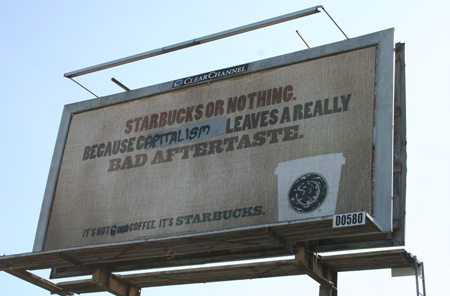
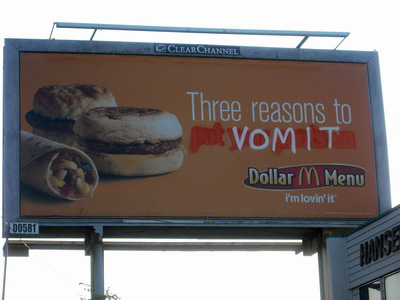
Seattle Billboards Corrected


Capitalism Hits the Fan - Richard Wolff

http://www.mediaed.org/cgi-bin/commerce.cgi?preadd=action&key=139

Consuming Kids: The Commercialization of Childhood

http://www.imdb.com/title/tt1337599/

čtvrtek 16. července 2009

Guma Guar / Chlapi sobě - 2006


Stop domestic violence
Amnesty international

Clapi sobě /Guys for themselfs

theme - Violence in beer advertisement

Guma Guar / Captain / 2007

Guma Guar / Geometrical fundamentalism 2007

How the Abu Ghraib Images Redefine Photography


By: Andy Grundberg, American Scholar, January 1, 2005

In spring of 2004, the International Center of Photography in New York presented an exhibition called "War in Iraq: The Coordinates of Conflict", featuring the work of James Nachtwey, Christopher Morris, Ron Haviv, and other veteran photojournalists. Apparently timed to mark the first anniversary of the Iraq conflict (the American invasion began March 19, 2003; President Bush triumphantly announced its end a month and a half later, on May 1), the show included most of the usual tropes of combat photography, from portraits of weary but determined foot soldiers to bloody corpses of the enemy. What was different about the pictures compared with traditional war photographs was that all had been shot with digital cameras.

More HERE

pátek 26. června 2009

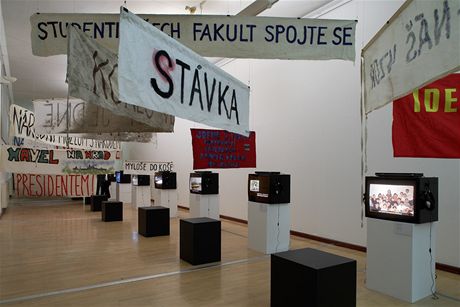
Výstava představuje pohled na to, co vzniklo na ruinách totality

Více než dvouletý umělecký výzkum proměn společností, které přešly od totalitního k demokratickému uspořádání, vyvrcholil výstavou uspořádanou Galerií hlavního města Prahy a iniciativou tranzit a nazvanou Monument transformace.

VÍCE ZDE

Goshka Macuga


History as art at the Whitechapel Gallery

Review by Jolyon Gumbrell
The study of a work of art can be used as a method of understanding the historical period in which it was created. Not only can a painting be appreciated for its beauty or its message, but if we know the date of its creation, for whom it was created and why it was created, then we learn something about the politics and society behind its inception. For example we can learn much about the court of King Henry VIII of England by studying the paintings of Hans Holbein the Younger.

Goshka Macuga turns this process completely around, where a piece of artwork on display is actually formed by items associated with a historical period. For example a museum display cabinet containing items from the 1930’s is in itself a piece of artwork in an exhibition. The separate items in the cabinet are equivalent to the different colours and tones in a painting.

In an inaugural exhibition entitled ‘The Nature of the Beast’ Macuga has chosen the theme of Picasso’s Guernica painting and the story behind it to form a work of art. The original Guernica painting was briefly exhibited at the Whitechapel Gallery in 1939, at the time intended to bring public awareness to the plight of Republicans who were fighting Franco’s fascists in the Spanish Civil War. Today’s exhibition features a reproduction of Picasso’s Guernica in the form of a tapestry along with artifacts and documents relating to the original painting, the reproduction, the United Nations Security Council, and the War in Iraq. The narrative of the exhibition links all of these things together in one story, that forms a work of art itself.

Pablo Picasso’s Guernica was painted for the Spanish Pavilion at the International Exhibition held at Paris in 1937. Picasso had been commissioned to paint a work of art for the exhibition in support of the Spanish Republican government, which at the time was fighting for its survival against Franco’s Nationalists. By coincidence the tragic event of the bombing of the Basque town of Guernica, happened shortly before Picasso was to start work on his commission. The atrocity committed against the civilian population of Guernica - in which more than 1,650 men, women and children were killed during an air raid, by German bombers in support of Franco - would provide the anti-war and anti-fascist theme for Picasso’s painting.

Picasso’s Guernica was exhibited at the Whitechapel Gallery from 31st December 1938 until 14th January 1939. The exhibition had been organized by the Stepney Trade Union Council with the purpose of giving material support to the refugees of the civil war - with pairs of leather boots or financial donations - and to enlist volunteers who were prepared to go out to Spain and fight for the Republican cause.

Goshka Macuga’s exhibition re-creates the memory of the 1938-1939 exhibition through the artifacts and documents on display. It was not possible for Picasso’s original Guernica painting to be put on display again at the Whitechapel Gallery, as it is today one of the main attractions at the Reina Sofia Museum in Madrid.

The tapestry reproduction of Picasso’s painting, itself forms part of the sequel to the anti-war narrative of Guernica. The tapestry was commissioned by Nelson Rockefeller in 1955 and woven by Madame J. de la Baume Dürrbach at the Dürrbach atelier in Paris with the approval of Pablo Picasso. In 1985 Mrs Rockefeller allowed the tapestry to be put on display outside of the Security Council Chamber at the United Nations Headquarters in New York, in memory of her husband and as a deterrent to war.

The narrative of Macuga’s work of art at the Whitechapel Gallery brings the viewer to recent historical events. Some of the photographs and documents in the display case tell of how the tapestry - which used to hang outside of the Security Council Chamber - was covered with a blue curtain on 5th February 2003. That was at the place and on the day, when the then US Secretary of State Collin Powell made a presentation before the world’s media that Saddam Hussein supposedly had weapons on mass destruction. The presentation made the case for war against Iraq. Somebody covered the tapestry because its anti-war message was too much of a condradiction of the other message delivered by Colin Powell that day. Today the tapestry forms the focal point of the exhibition at the Whitechapel Gallery in London.

The Nature of the Beast exhibition by Goshka Macuga is being held at the Whitechapel Gallery, 77-82 Whitechapel High Street, London, E1 7QX, from 5th April 2009 to 18th April 2010. For more information on this exhibition and others at the Whitechapel Gallery visit www.whitechapelgallery.org .

Novinář i umělec musí zaujmout během zlomku vteřiny. A to zeslabuje schopnost levice oslovit

Antonín Kosík

"Sociální, ale i jiný obsah se vytrácí, kultura se stává showbusinessem (to není pejorativní značení), umělec musí navždy zaujmout během zlomku vteřiny a masová kultura pop music se stává pravicovou. Ne kvůli obsahu, ale kvůli jeho absenci. Tomu se musí podřídit i zpravodajství: žádné dlouhé uvažování. Klik a dál," píše filozof a pedagog Antonín Kosík v úvaze, k němuž dala podnět polemika nad jedním článkem filozofa Václava Bělohradského. Kosík se ovšem odráží k obecnějším tématům.

VÍCE ZDE

VÁCLAV BĚLOHRADSKÝ - NEČITELNÁ ZEMĚ

„V těchto volbách jde o masivní útok před listopadových sil…, o pokus levice převzít moc, možná i ústavní“ – hlásají komentátoři například MfD. Bohumil Pečinka, novinář, který už od poloviny 90. let vede záslužný boj proti převaze morálního kýče v české politické kultuře, napsal: V očekávání předčasných voleb do Poslanecké sněmovny v říjnu 2009 se vytváří nejfalešnější předvolební aranžmá, jaké polistopadová politika zažila.
Otevřené politické soupeření má být nahrazeno bojem pravdy proti lži. Středopravicový politický tábor se má sjednotit jako nové „Občanské fórum“, které nebude mluvit o politických zájmech, ale o hodnotách.

VÍCE ZDE

čtvrtek 25. června 2009

The Aesthetic Responsibility - Boris Groys


Writer, curator and philosopher Boris Groys gave a keynote lecture on how design today functions as a leading medium of self–revelation and self–positioning in public space.

http://www.friezeartfair.com/podcasts/details/the_aesthetic_responsibility

Posted by Sadie Renwick

čtvrtek 18. června 2009

Guma Guar proti antisemitismu

Skupina Guma Guar se důrazně distancuje od hanebné protižidovské kampaně vedené jejím jménem. Nálepky obsahující text KILL ALL (JEWS - symbol davidovy hvězdy), které se v minulých dnech objevily v okolí pražských galerií a uměleckých škol nejsou v žádném případě výtvorem skupiny ani žádného z jejich členů. Jde o cílenou diskreditační kampaň, která má skupinu Guma Guar poškodit. Skupina Guma Guar se od svého vzniku naopak snaží ze všech sil bojovat proti všem formám xenofobie a rasismu.

GROUPE GUMA GUAR
Praha, 18. 6. 2009

středa 3. června 2009

Máme právo kritizovat sionismus?

Michal Vimmer

Reaguji na Slačálkův komentář ke zdevastovanému umění - no to se povedlo. Výstavu jsem neviděl: píšete, že Fuss použil záběry z "holo"filmů Schindler list a Pianist a herce v nazi mundůrech opentlil šesticípými hvězdami. Myslím, že je to velmi namístě a bohužel akt velké odvahy, která se kurátorovi a potažmo autorovi rychle vymstila. (Připomínám domácí pražskou několikahodinovou existenci protestu Ivana Voseckého nad letenským tunelem IZRAHELL. Policie jednala rázně. Rozmetala litery jednadvě.)

Myslím, že:
1. Fuss přesně upozorňuje na "holo"klišé a "holo"kýč, tedy to, co se stalo z nacistického vyvražďování židů v obraze, který masám podává popkultura (zde filmy). Zvěrstva nebyla zřejmě dost špinavá, aby nebylo třeba je přikašírovat, přifukovat a činit ještě obludnějšími!? Jakoby fakta sama nebyla dost schmutzig. Jakmile někdo "stvoří" něco "o holokaustu", aspiruje tím na rovnou na uměleckou cenu v tom kterém oboru; pokud to "dílo" za moc nestojí, stává se alespoň nekritizovatelným. Tvůrce je přece "angažovaný" na správné straně, tak bacha na něj.

2. Argument, ... "Snaha převést současné utrpení Palestinců na minulé utrpení Židů je scestná – jedná se o dvě výrazně odlišné tragédie ..." považuji za lichý. Respektive, jistěže nelze tvrdit, že "je to totéž." Není, je jiná doba. Jenže sionistická propaganda stojí a padá právě na tom, že směšuje někdejší oběti antisemitismu a nynější Izraelce provádějící "obranně-preventivní" akce na území Palestiny i mimo ně. Z toho plyne sionistický absolutní nárok na nekritizovatelnost počínání Izraelců. Jenže jak uniknout nutkavé paralele, že pokud se někdo důsledně desítky let chová jako nacista, asi to bude svým způsobem nacista?

3. Mimochodem: David Duke. Nerozumím argumentaci J. Čulíka: "Některé věci se tolerovat nedají, reklama nereklama. Spíš mám dojem, že veškerý mediální shon kolem Duka je tzv. "jednodenní zázrak". Za týden o něm nebude nikdo vědět." O tom, co budeme vědět za týden, přece nerozhoduje význam věci, ale média! Pokud propagandě na problému záleží, zaručeně vám na něj nedá zapomenout. Kupte si třeba každou sobotu Mladou frontu nebo Lidové noviny a spočítejte si slova s kořenem "žid...", nebo "holokaust..." Nezapomenete! Svoboda slova buď je nebo není. V USA tu svobodu alespoň Duke má, jiní o ní už přicházejí nebo přišli. Jestli zrovna tohle je pozitivní trend?

A zde je rozhovor s Dukem. To by se asi nemělo tisknout, že?

P.S: Velmi bych se přimlouval za vydání "holodogmat", kde by bylo jasně stanoveno, o čem je za všech okolností zakázáno diskutovat - abychom nenarazili.

pátek 29. května 2009

Radovan Čerevka - From the TV News Studios


digital print, 42 x 29, 7cm
www.cerevka.com

http://www.theinfluencers.org/en

The word "influencer" is most often used by marketing strategists to refer to cool people to whom other consumers turn to for fashion and food advice. But the organizers of The Influencers, an annual "culture jamming and guerrilla communication fest" brandish this word like a weapon in the fight against the corporatization of culture. On February 5-7, the artist groups d-i-n-a and Eva and Franco Mattes (a.k.a. 0100101110101101.ORG) will present their fifth festival "dedicated to exploring unconventional weapons of mass communication." Their approach grows out of a classical perspective on détournement but is updated by an understanding of networked infrastructures and new forms of mobility and social organizing that effect protest strategies in digital culture. In addition to talks, workshops, and impromptu interventions, the festival's events will revolve around eight commissioned works by Survival Research Laboratories, Ztohoven, BLU, Improv Everywhere, Julius von Bismarck, Wu Ming, Swoon, and Wolfgang Staehle. This is an eclectic group, to say the least, whose work ranges from graffiti to pyrotechnics to comedic group performances to poetic video installations. The group's diversity serves to illustrate the wide reach of commercialism's impact and the wide range of people interested in fighting back in support of the liberties that become threatened by corporate encroachment onto public space and public speech. One goal of the festival will be to map out how these alternative voices can infiltrate the hardlined frontier between public and private, so these artists were thus selected for "their taste for risk, the impulse that moves the authors of these projects to build dangerous machines, act politically incorrectly, use anachronous technology, or simply to defy common sense." It sounds both fun and challenging, but if you can't make it to Barcelona, visit their site and follow the path to their archives, which feature "more than 25 hours of video with the artists, activists, and media-freaks invited to The Influencers since 2004." - Marisa Olson


středa 27. května 2009

Že prý jsme to přehnali


Lenka Dolanová

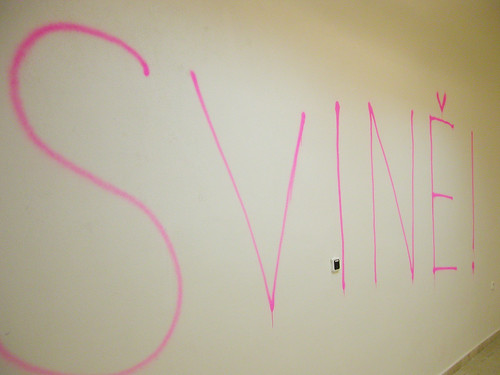
S Milanem Mikuláštíkem o výstavách Achtung! a Svině!

V brněnské Galerii G99 visí na zdi prasečí hlava s růžovým nápisem Svině!. Součástí této instalace skupiny Guma guar je fotokoláž s trojicí hajlujících skinheadů, kterým uniformovaný policista dává zelenou. Jedním z členů skupiny je Milan Mikuláštík, který se nedávno stal kurátorem Galerie NoD. Hned jedna z prvních přehlídek, kterou zde uspořádal, vyvolala debatu o svobodě vyjadřování.


V pražské výstavní síni NoD se před nedávnem událo plno změn. Kavárna je nová, změnili se kurátoři galerie a NoLabu. S čím jste sem přišel a proč jste vlastně přijal kurátorskou pozici?

Přišel jsem uprostřed těch změn. Předešlý kurátor Jiří Ptáček se rozhodl prohodit místnosti, udělat kavárnu vpředu a galerii vzadu. Myslím, že to byl dobrý nápad z praktických důvodů. Kavárna může fungovat dlouho do noci a výstavu lze přitom bezpečně uzavřít. Vystavovaná díla teď můžeme pojistit a situace je mnohem přívětivější i z čistě výstavnického hlediska. Zakládám si na tom, že do této galerie může – přes deklarovanou otevírací dobu – člověk přijít pozdě večer nebo v noci. Teď po rekonstrukci jsou to vlastně tři galerie v jedné. Prostor NoD/Café je určen především pro výstavy závěsných obrazů, dvě místnosti Galerie NoD pro hlavní výstavní program a takzvaný NoD/Box, samostatná místnost v zadní části galerie, je vyhrazen především pro výstavy subtilnějších forem a pro prezentaci studentů a začínajících umělců. Sám jsem umělec a zabývám se často politickým a angažovaným uměním – pochopitelně se podobné tendence snažím přinášet i sem do NoDu.

Co pro vás znamená politické umění?

V tom panuje jistý terminologický chaos. Zajímá mě umění, které se nějakým způsobem angažovaně staví ke společnosti, řeší se v něm společenské problémy. Může to být na různých úrovních, někdy se používá označení sociální, jindy politické, angažované nebo aktivistické umění. Já za nejpříznačnější považuji termín kritické umění. Následující výstavu v Galerii NoD bude mít Milan Kohout, Čechoameričan, který začínal v českém undergroundu, odešel na začátku osmdesátých let do Ameriky a myslím, že i v americkém kontextu je jedním z nejzajímavějších a nejradikálnějších umělců. Zabývá se právě společenskou kritikou. Spíš než intelektuálně náročné věci se snažím v Galerii NoD vystavovat přístupnější umění. To neznamená, že musí být hloupé nebo prázdné, ale byl bych rád, aby bylo pokud možno čitelné i pro člověka, který není kunsthistorik nebo umělec. Sem chodí velmi často lidé, kteří nejdou cíleně do galerie. A také ty bychom rádi oslovili. Pokud jim ale nabídneme nějaké náročné, nesrozumitelné věci, samozřejmě je to zajímat nebude.

Více ZDE


pondělí 11. května 2009

Terorismus nebo tragikomedie? - G. Agamben

Francouzský deník Libération uveřejnil reakci italského filosofa a esejisty Giorgio Agambena na zatčení devíti aktivistů na farmě v Tarnacu. Podle Agambena se Evropa přibližuje fašistické Itálii. S novými zákony v jedné ruce označuje širokou paletu politických aktivit jako teroristické, a to i tehdy, když jí chybí v druhé ruce důkazy.


více zde